
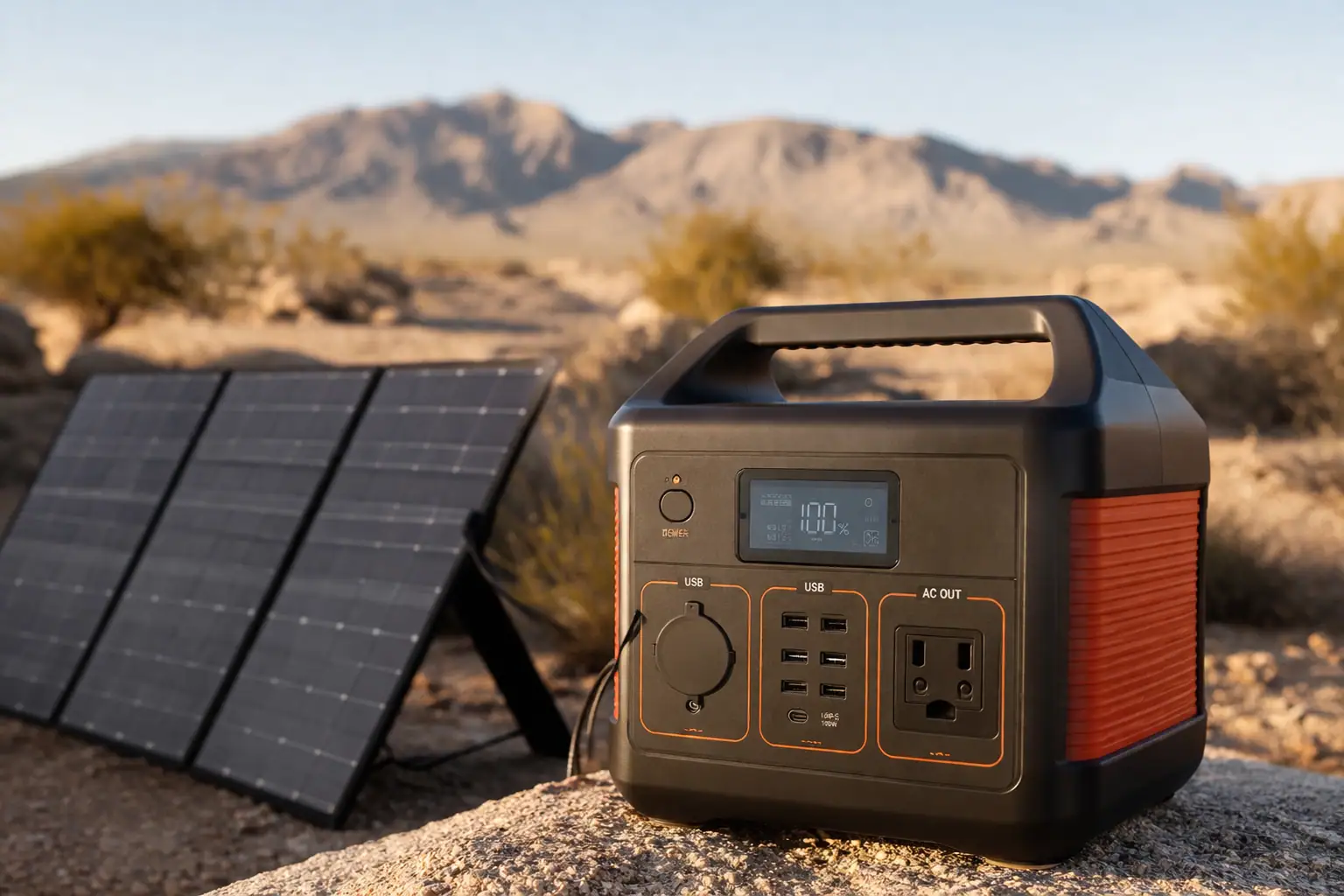
Portable power stations have come a long way. They’re more powerful, more versatile, and for a lot of van builds, they’ve become a legitimate electrical solution instead of just a little emergency backup.
If you’re shopping for one, there are a few things you need to think through before throwing money at the prettiest box with the slickest marketing.
Because let’s be honest: a power station is only a good investment if it actually powers the life you want to live.
Start With How You’ll Actually Use It
Before you compare brands, specs, or price tags, get clear on one thing first: what do you want this power station to do?
That sounds obvious, but this is where people get tripped up. A power station that works beautifully for one person may be totally useless for someone else.
Are you just charging a laptop and phone? Running lights and fans? Making coffee? Cooking with electricity? Powering an air conditioner or heater? Those are very different power needs, and your answer will determine the size and capability of the unit you should be considering.
For me, I wanted a power station to serve as a temporary solution before I build out a custom electrical system in my van. After that, my plan is to keep using it as a backup generator and as portable power away from the van. That made me prioritize flexibility and capacity over going with the smallest or cheapest option.
Capacity Matters More Than Most People Realize
One of the first specs you’ll see when shopping is battery capacity, usually listed in watt-hours (Wh) and sometimes discussed in amp-hours (Ah). This tells you how much energy the battery can store.
And yes, this matters. A lot.
If you want your power station to run more than just a phone charger and a laptop, you need enough capacity to support your daily use between recharges. You also need to think about how often you’ll be able to recharge it and how you plan to do that.
Ask yourself:
- Do you just need to charge electronics like a phone and laptop?
- Will you be powering lights in your van?
- Are you planning to use electric cooking?
- Will you run roof fans or other ventilation?
- Do you want it to handle an air conditioner or heater?
That last one is where things get real fast. Creature comforts are cute until you realize they require actual power.
The Inverter Rating Is a Big Deal
Capacity tells you how much power the battery can store. The inverter tells you how much power it can deliver at one time.
That’s a huge distinction.
A power station can have a large battery and still not be able to run high-draw appliances if the inverter is too small. So if you want to power something like an air conditioner, blow dryer, induction cooktop, or coffee maker, you need to look closely at the inverter rating and make sure the unit can handle that load.
If your appliance pulls more wattage than the inverter can provide, it’s not happening. Period.
Pay Attention to the Outputs
The next thing to look at is what kinds of outputs the power station has and whether they match the devices you want to use.
Most power stations include:
- Standard 110V AC outlets for household-style plugs
- USB ports for phones, tablets, and small electronics
- A 12V DC or cigarette-lighter-style outlet on some models
But don’t stop at just checking whether the plug exists. Look at the amperage and output rating of those ports too. Not every port is created equal, and that matters if you’re trying to run specific devices.
Inputs Matter Just as Much as Outputs
You also need to think about how you’re going to recharge your power station.
Most units will include an AC charging option, which means you can plug into a regular household outlet. Many also have a DC input that lets you charge from solar panels or from a DC-to-DC charger connected to your vehicle.
Some units have multiple charging inputs, which can be a big advantage depending on how you travel and how quickly you need to recharge.
This is where you need to think practically. Are you mostly charging while plugged in at home or at campgrounds? Are you relying on solar? Do you want to charge while driving? Figure out your real-life charging routine and make sure the power station supports it.
Why I Chose the Jackery HomePower 3600 Plus
I personally decided to go with the Jackery HomePower 3600 Plus for a few reasons.
First, I wanted high capacity because I’m not trying to suffer unnecessarily in the name of van life. I like a few creature comforts, thank you very much.
Second, I liked that it’s on wheels, which makes it much easier to move around and use outside the van when needed.
And third, one of the biggest selling points for me was the 30-amp output. Since I plan to use this as a temporary solution now and then later as backup power, I wanted an easy way to plug it into my future electrical system the same way I would plug into shore power at a campsite. That 30-amp connection gives me that option.
For my use case, that made a lot of sense.
What Other Brands Do Well
There are a few major brands most people tend to gravitate toward right now: Jackery, Bluetti, and EcoFlow.
Each one has advantages depending on how you plan to use it.
One thing I do like about many Bluetti models is that they include a car-style cigarette outlet, which is surprisingly versatile and lets you plug in a wide range of 12V accessories.
I’ve also noticed that some EcoFlow models include an Anderson connector, which can make it very easy to power something like a 12V air conditioner. That kind of plug-and-play setup can be incredibly appealing if you want to run larger 12V appliances without overcomplicating things.
So while I chose Jackery, I can absolutely see where the other brands offer features that might be a better fit for someone else.
Compatibility Is Where Things Get Sneaky
This is one of the biggest things people overlook.
The accessories and charging components used for a power station are not always interchangeable with a custom electrical system—or even with another power station brand.
For example, the same DC-to-DC charger I would use with a typical Victron and lithium battery system is not the same charger I can use with my Jackery. The Jackery DC-to-DC charger is designed specifically for Jackery power stations, and it isn’t compatible with other devices. It also costs more than many of the DC-to-DC chargers I see used in traditional custom systems.
That may not be a dealbreaker, but it is absolutely something you want to know before you start adding parts to your cart like you’re on a shopping spree with no supervision.
Solar Compatibility Matters Too
If you plan to recharge with solar, you need to look carefully at what your power station can accept.
Make sure the unit can handle the input voltage and amperage coming from your solar panels. You may also need to modify connectors or use adapters depending on the brand and plug type.
And in some cases, you may need a solar charge controller between the panels and the power station to protect the unit from overcharging or from sending in power it can’t properly manage.
In other words: just because something is labeled “solar compatible” does not mean every panel setup will work seamlessly out of the box. Read the specs. Then read them again.
Final Thoughts
A portable power station can be a fantastic solution for van life, whether you want a simple setup, a temporary electrical system, or a backup power source after you build something custom.
But the right choice depends entirely on how you plan to use it.
Look at:
- Capacity
- Inverter size
- Input options
- Output options
- Solar compatibility
- Brand-specific accessories
- Long-term usefulness
- Cost
The goal is not to buy the most popular one. The goal is to buy the one that actually works for your setup, your comfort level, and your plans.
Because nothing says “bad decision” quite like spending a pile of money on a power station that can’t do the one thing you bought it for.