
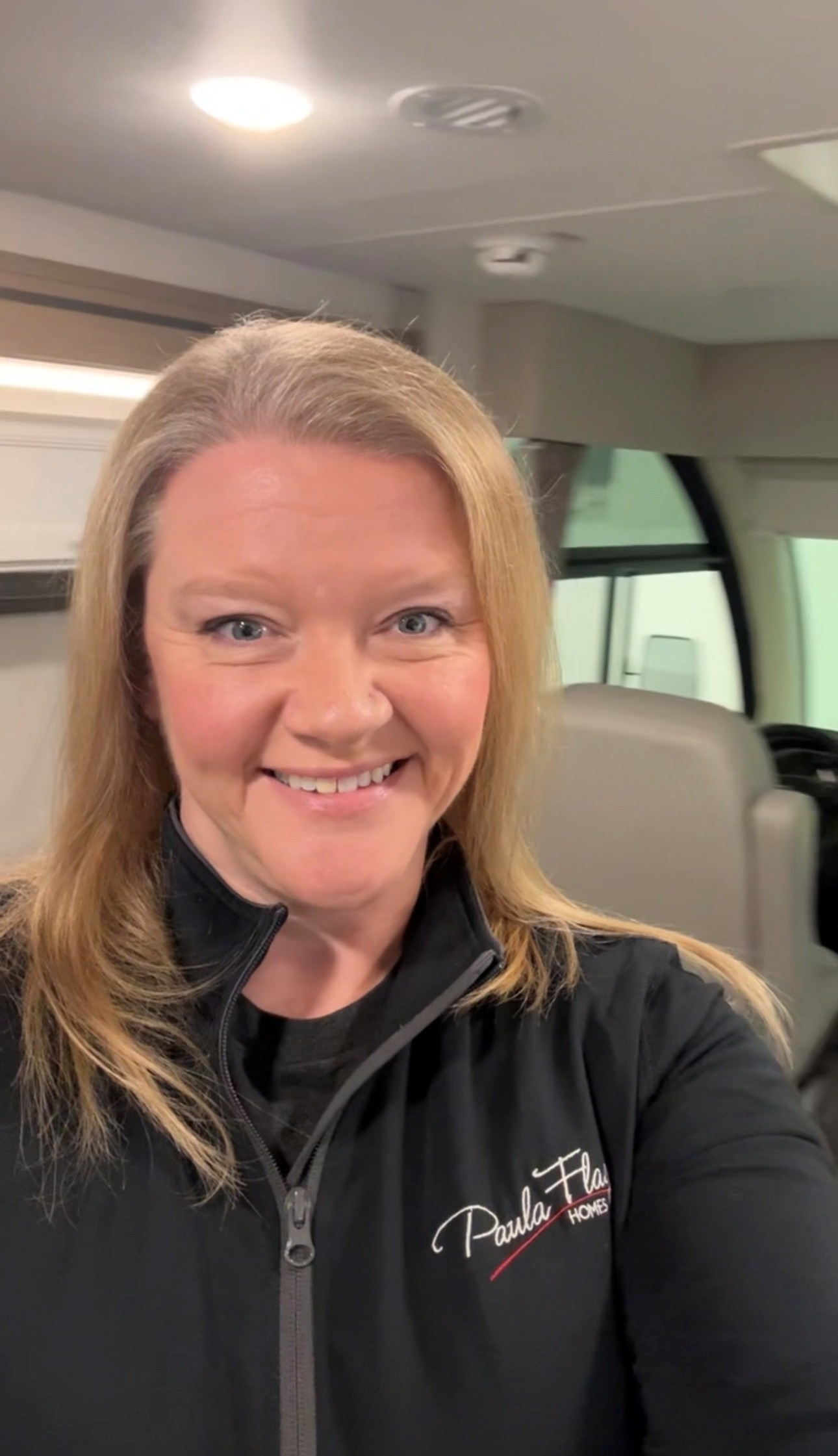
Four years ago, I wasn’t planning van life. I was planning for my daughter’s graduation.
In 2022, I started thinking about what life would look like when she left for college. It was becoming clear she might play volleyball at a competitive level — possibly far from home — and I knew I wanted the flexibility to be there for her games. But I also knew something else was coming: an empty house, a quieter schedule, and an entirely new season of life.
So, I asked myself a bigger question:
What do I want my life to look like in 2026?
Not just emotionally. Financially. Logistically. Practically.
I hired a coach and did a deep dive into designing that future — what I wanted to do, what it would cost, how much I’d need to earn, and what systems needed to be in place to make it sustainable. And since 2022, I’ve been building toward that vision.
Building Financial Flexibility
If I wanted geographic freedom, I couldn’t rely solely on income tied to one location.
So, I made strategic moves.
In 2022, I bought a home with an unfinished basement and converted it into a two-bedroom apartment that now covers roughly half my mortgage. That wasn’t an accident — it was step one in creating mobility.
My broader strategy was to increase passive income through rentals and grow referral income in real estate while developing remote income streams not tied to physical presence. I planned to purchase additional rental properties, but when the real estate market slowed in 2022 and 2023, expansion had to pause. Instead of forcing growth, I adapted.
In 2025, I was presented with an opportunity to work alongside my previous broker, helping real estate agents organize their financials, minimize tax liability, and implement wealth-building strategies. Now I operate in two lanes: serving buyers and sellers with their real estate goals and helping agents strengthen their financial foundations. That diversification added flexibility.
As my daughter prepares to leave, I also plan to rent out an additional room in my home — ideally to a traveling medical professional — further reducing overhead. The goal has always been simple: lower fixed expenses, increase flexibility.
The Reality Check
The DC real estate market shifted again in 2025 and 2026, and my sales business evolved with it. At the same time, I accumulated some debt during these transitional years, and I made a decision: I want to enter my nomadic era clean.
That means paying down debt, trimming expenses, and staying creative about income. Anything that offsets costs or increases revenue is on the table for the first year or two of travel. The commitment hasn’t wavered — but the strategy continues to evolve.
The Original Vision: Slow Travel
Back in 2022, my plan was simple. During volleyball season (September through late November), I’d center myself near wherever my daughter was playing. The rest of the year, I imagined living in different cities for one to three months at a time, renting Airbnbs and immersing myself in the culture slowly.
I still love that idea — especially internationally.
But I have a six-year-old Shipoo named Bentley, and I have a young adult daughter who will be learning to navigate independence. Being oceans away didn’t feel right, at least not yet.
So, for the foreseeable future, domestic — or North American — slow travel makes more sense. International exploration can come later.
The Mobile Hotel Idea
Even domestically, slow travel has friction: pet fees, inconsistent policies, constant packing, airport logistics, living on someone else’s timeline. I wanted something more laid-back. Something where I could move on my own schedule.
That’s when the idea hit me: what if I had a mobile hotel room? A tiny apartment I could take with me.
I had never camped. I had never stayed in an RV. I wasn’t outdoorsy. But the idea of a mobile apartment? That intrigued me.
Exploring RV Life
I went to an RV dealership and toured small travel trailers, compact Class C motorhomes, and a Class B van. The travel trailers made sense on paper, but something didn’t click. The Class B was intriguing, but the one I toured had dead batteries and it was getting dark — it felt claustrophobic.
At the time, I still imagined staying in cities for months at a time, so I leaned toward a Class C with a tow-behind car.
Then in summer 2025, I rented an RV.
And I loved it.
I loved driving it, setting it up, and sleeping in it. I realized I didn’t need as much space as I thought to feel comfortable. But I also realized I didn’t love campgrounds. And perhaps more importantly, I realized I needed agility.
Why Agility Won
As my financial priorities shifted, I anticipated needing to return to Maryland more frequently, gas mileage, maneuverability, and flexibility began to matter more than square footage.
That’s when vans came back into the conversation.
I looked at many manufactured Class B motorhomes. Most felt overly engineered — too many floor-to-ceiling structures, wet baths, and permanent cabinetry that made the space feel closed in. And the price tags were significant.
The more I evaluated the numbers and the layouts, the clearer it became that buying pre-built wasn’t the best fit financially or functionally.
Choosing the Self-Build Path
I didn’t originally want to build a van. I wanted to buy something turnkey and hit the road. But the deeper I researched, the more it made sense to build out a space gradually and intentionally that functions exactly as I need.
After extensive study — including time at the Hershey RV Show and hours comparing chassis options — I landed on what feels like the best foundation for me:
A Ram ProMaster 3500 159” Extended, ideally 2022 or newer, with push-button start, updated transmission, and relatively low mileage. If I’m investing $15,000–$20,000 into a build, I want it on a solid mechanical platform.
The plan is to begin with a minimal setup and build over six to twelve months, allowing real-world experience to guide the design. What looks perfect on paper isn’t always what works on the road.
So How Did I Get Here?
I didn’t wake up wanting to live in a van. I designed freedom and reverse-engineered it.
This journey has been a mix of financial strategy, emotional preparation, market shifts, RV experimentation, and constant iteration. Plans have adjusted. Numbers have changed. The route has refined itself.
But one thing hasn’t changed since 2022:
I’m committed.
Whatever it takes, I’m making this next chapter happen.
And we’re just getting started!
Leave a Reply